
the year of the disappeared: a syllabus for the departed

Note: All source material in this syllabus is listed in the footnotes and is open access—no barriers to entry here. Also. Monthly, annual, and founding member subscribers are invited to our first Soulwork Reading Salon: Lit Theory Live on Friady, November 14.

November is a thin light. The kind that leaks across the hospital sheets, gilding edges of monitors and IV lines, turning every corner of a room into a small altar. I lie here, recovering, the body soft and untrustworthy, and I think about absence. About how absence feels like presence when it is all that remains.
This year, the world feels emptied. Malcolm Jemal Warner. D’Angelo. Nikki Giovanni. Assata Shakur. Angie Stone. Their names rise like incense, heavy in the chest. I have written about some of them before. Together, we have pulled at their words, their movements, and their insistence that Black life be known, felt, accounted for. And ya’ll know, if Imma do anything, it’s turn the lives of our ancestors into a syllabus. One I can lay before us together. We can read it in community, study it side by side, and let the work of the living continue alongside the departed.
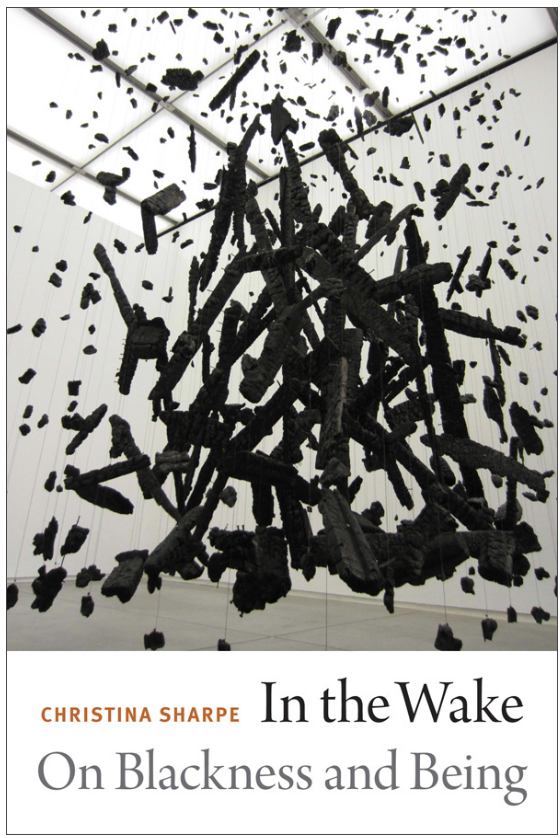
Christina Sharpe calls it “wake work.” To live, to study, to move in a world shaped by loss is to inhabit the wake: the aftermath that stretches behind the departed, a space where presence lingers in what is no longer here. It is in this wake that I write, that I breathe, that I sit in a hospital room becoming a classroom for grief, a workshop for study. The living and the dead sit side by side; the lesson is in how we attend, how we continue.
Which teacher (public or personal) has shaped your understanding of grief, survival, or Black life? Share a name, a story, or a reflection below so we can archive together.
The Pedagogy of Mourning
To sit with grief is to sit with a teacher whose lessons are both painful and precise. Christina Sharpe reminds us in In the Wake: On Blackness and Being that living amid loss is itself a method: presence in absence, study as care, attention as survival1. In the wake of those we’ve lost—Nikki Giovanni, Assata Shakur, Angie Stone, Brandi Collins-Dexter, Carolyn Cheeks Kilpatrick, Anita Lyons Bond, Michael Dinwiddie, and the unnamed guides in our personal lives—we are called to notice, to catalog, and to read the syllabi their departures leave behind.
I follow the threads traced by Saidiya Hartman in Lose Your Mother2, where absence, genealogy, and memory intersect. Hartman models mourning as archival labor: noticing, documenting, and attending to gaps in the historical record. In “Mobility, Migrant Mnemonics and Memory Citizenship,”3 Pramod Nayar extends this lens, showing how migration and remembrance make us active participants in histories often coded by loss. Reading these works alongside my own embodied experience, I see that the work of staying and surviving is also the work of scholarship.
Other scholarship illuminates the contours of this labor. “Memory, Absence, and Carrying On in Black Literature…”4 traces absence as narrative strategy, showing how stories persist in the margins. Harvey Neptune’s Loving Through Loss5 situates diaspora and grief as intertwined with care and labor, reinforcing that attention to mourning is itself a form of vocational practice. Essays like “Autobiographical Absences” 6and B. R. Wilson’s work7 on maternal grief expand this syllabus, teaching that grief is relational, political, and generational.
And then there is Toni Morrison. In her Wellesley Commencement Address8, she reminds us that life itself is curriculum. She tells us that our responsibility as students of existence is to attend to what is present and what persists in absence.
Soulwork takes the position that this is our ultimate vocation. To care for oneself, to persist, to turn attention to study, practice, and self-definition. Grief is vocation; attending to it is soulwork: building altars of memory in writing, in ritual, and in the careful preservation of knowledge and story.
This is the pedagogy of mourning: it asks us to remain present, to practice attentiveness, to translate grief into acts of learning. Each time we read their words, recount their deeds, preserve their stories, we are turning mourning into method. We are honoring the ongoing syllabus of Black life, ensuring that even in absence, lessons endure. The classroom is quiet, yes, but it is alive—the teachers are gone, yet their curriculum runs through us, demanding participation, reflection, and continuity.
And here I insert the personal losses, the unnamed guides whose wisdom and care shaped the corners of my own life: the friends, the family elders, the teachers who existed in moments, in advice, in stories told in kitchens or on porches. Each one has left an imprint. Each one contributes to the syllabus that grief writes before our eyes.
Love y’all. Mean it. If you love me back, buy me a book!
-B
REMINDER: monthly, annual, and founding member paid subscribers can join our first Soulwork Reading Salon: Lit Theory Live on Friday, November 14. We’ll read In the Wake together, reflect, and situate its insights alongside Hartman, Morrison, and others. Bring your questions, your reflections, and your own teachers—public or personal. The syllabus continues in the live conversation, and your presence completes it.
Next Reads
If you missed last month’s syllabus on Assata Shakur, catch up [here].
For a deeper dive, check out the essay exploring the poem in her autobiography [here].
[1] Sharpe, Christina. In the Wake: On Blackness and Being. Barnard Center for Research on Women, 2015. PDF ↩
[3] Hartman, Saidiya. Lose Your Mother: A Journey Along the Atlantic Slave Route. Free PDF, CILEX Law School, 2007. PDF ↩
[4] Nayar, Pramod K. “Mobility, Migrant Mnemonics and Memory Citizenship: Saidiya Hartman’s Lose Your Mother.” Nordic Journal of English Studies, 12(2), 2013. PDF ↩
[5] “Memory, Absence, and Carrying On in Black Literature and …” eScholarship. PDF ↩
[6] Neptune, Harvey. “Loving Through Loss: Reading Saidiya Hartman’s History of Black Hurt.” Anthurium. PDF ↩
[7] “Autobiographical Absences: Kinship and Mourning in the Memoirs of Jesmyn Ward and Saidiya Hartman.” HIVES / BeHIVES. PDF ↩
[8] Wilson, B. R. “‘Her work of love’: forced separations, maternal grief, and …” CentAUR. PDF ↩
[M] Morrison, Toni. “Wellesley Commencement Address,” 2004. Transcript ↩





Member discussion