
Inhabiting 2026: A Womanist Theology of Being Here

i dont make new years resolutions. especially when last year sucked lol.

I sometimes feel like I’ve been living in the foyer of my own life.
Do you know what a foyer is? My Nanna is the only person I ever knew in real life who had one. It’s a little in-between space by the front door where everybody would loiter before they left her house. Hers is adorned with a crystal chandelier, a coat rack, and a faded portait of Martian Luther King Jr. It’s more vestibule than room, and when you’ re in it, your body is technically inside, but your nervous system is always halfway out the door.
That "lol" up there is the only way I know how to process 2025. They say niggas laugh to keep from crying. But I’m tired of fake laughing by the door. I need to settle into my life more. I need a way to stay.
the word I keep coming back to is ‘inhabit’.
A New Year’s resolution can feel like a cage, but a word of the year feels like a vibe. It’s loose. It’s got room for me to mess up, or change plans.
inhabit (v) in-ˈha-bət:
to occupy as a place of settled residence or habitat.
bell hooks calls us to “inhabit marginal space that is not a site of domination but a place of resistance.” Because inhabitance is less about suffering beautifully and more about opposing that foyer-energy I’ve been stuck in. And honestly, that’s a terrifying concept because it means that to inhabit requires feeling the weight of everything I’ve been trying to outrun.
In Hebrew, inhabit is yāshab1. It’s a heavy-duty verb. The word means to sit, to remain, and to dwell.
which brings me to my grandmother. and god, i guess, because what’s the difference?
She passed away peacefully on December 19th. MotherGrand was my primary translator for the Lord. Christianity has always been a mess of paradoxes, and I’ll be clear: I don’t fuck with “Empire God.” If that’s the only one available, I’ll stay in the foyer with my coat on, tyvm. But my grandmother was a believer.
Her prayers worked. That’s the only way I can spit it to you. When my MotherGrand put her hands on you and called out to the Lord, it was as she said. Amen. And so would it be.
That lady knew how to inhabit. She knew how to sit in a room with a God that actually saw her, even when the world was trying to evict her from her own peace. Yolanda Pierce (2021) calls this “grandmother theology”2—a sacred knowledge passed through Black women’s lives that exists outside of, and often in spite of, institutional Christianity.
But there’s another thing I want to name here: we gotta acknowledge how Black folks have held Jesus in ways the dominant church never intended.
black jesus is its own thing.
I hate the way we acknowledge that Black people reclaim and subvert everything including music, language, and fashion, but Christianity is the one area where niggas got tricked. With all due respect, the Black Church, hush harbors, and gospel music have been a central force behind every single freedom we have ever won for ourselves on these Turtle Islands.
Black Jesus carries a cultural theology that pushes back against Empire God. Enslaved people did not sit back and passively inherit Christianity. They appropriated, encoded, and reimagined the story of Jesus as a methodology of resistance. The religion that White overseers used with the intention to pacify became an secret, embodied, and deeply Black language of freedom.
Sociologist and theologian Albert J. Raboteau writes about this in Slave Religion (1978): the enslaved, even when forced into Christian worship, shaped a sensibility that saw God as a present companion in suffering and liberation (Psalm 46:1: “God is our refuge and strength, a very present help in trouble”). This was the “invisible institution,”3 or the secret worship during slavery, including the ring shouts, spirit possession, and the call-and-response traditions that grew directly out of West African ritual forms brought here by force. When our ancestors shouted “He is able!”, they were performing a theology that declared God was with them in the dirt and also leading them toward the exit.
Womanism says that to inhabit is to refuse to be disembodied by trauma.
inhabit (v.) [Womanist]:
The spiritual and political act of reclaiming one’s own body and history and space as a primary residence; a refusal to live as a tenant in a life shaped by outside forces.
To inhabit is what Audre Lorde (1984) calls the “Uses of the Erotic”—an internal requirement for joy that acts as a bridge between the spiritual and the political. It is what James Cone (2011) insists upon: a Black Christology where Jesus stands with the lynched and the oppressed, and not the powers that be.
& that applies to how I’ve been working, too.
Dr. Katie Geneva Cannon (1988) taught us that our survival is an act of moral agency4; but next year I wanna do more than just to survive. I want to arrive.
I am reclaiming my capacity to provide. I’m taking my seat as a provider, but I’m doing it at what rose june calls the pace of flourishing.
Rather than expecting to flourish as a reward for finishing the work, I’ve decided that flourishing is the condition under which the work should have been happening all along. All things work together for my good, like the Bible says.
I am finally deciding that I have enough, I know enough, and I am enough to sit down and start treating my Self like a home that I actually live in.
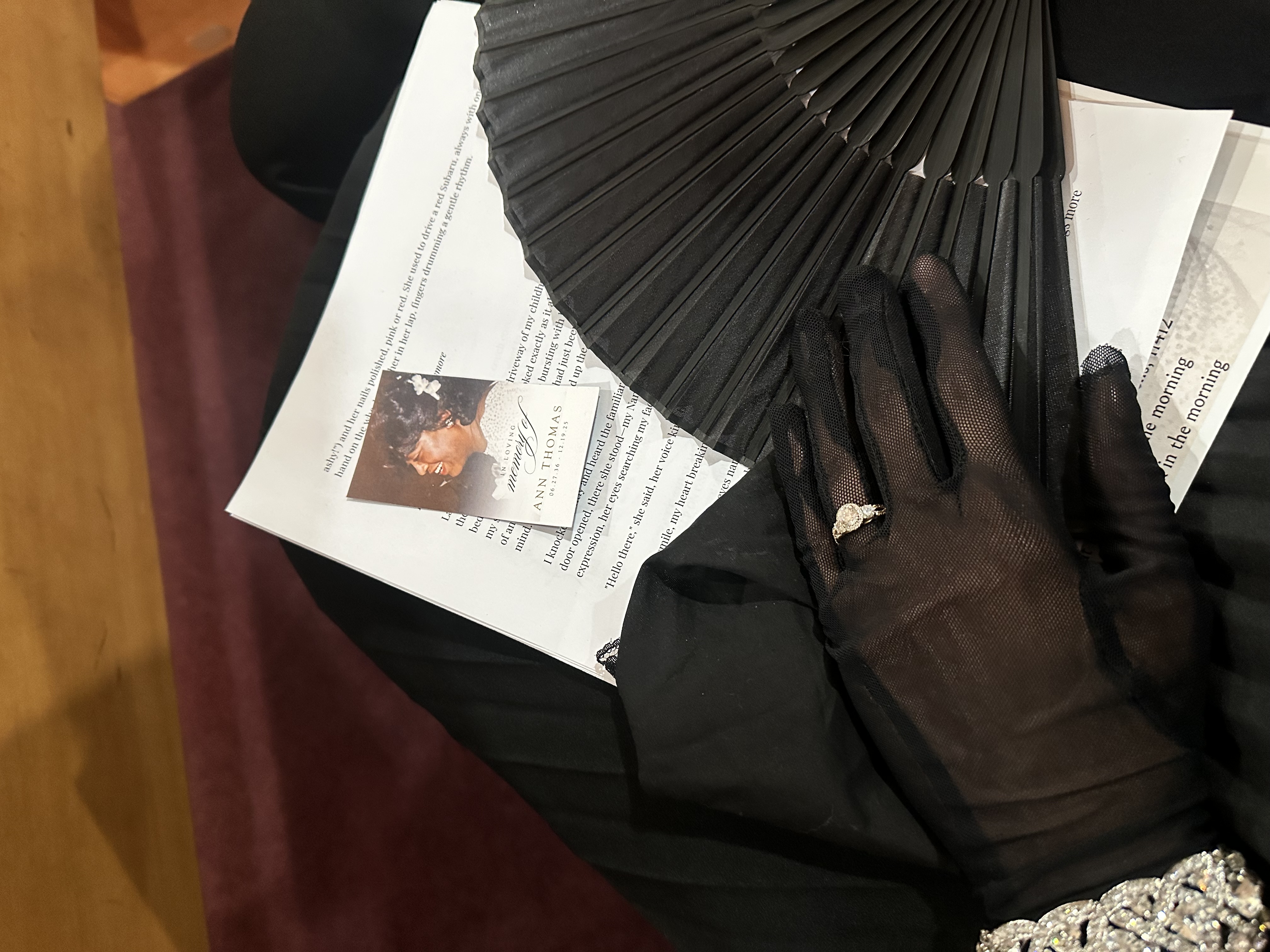
Now that my precious MotherGrand is gone, the foyer feels even colder, because her passing ripped the hinges off the door. It has made my questions of God “unfinished business” that I can’t ignore while I’m lingering by the entrance.
Regardless of if the story of the Incarnation is history or parable, (& I don’t pretend to know for sure) point of the story has got to be that God intentionally chose to become flesh. It means God chose to inhabit a body that got hungry, and tired, and eventually, a body that broke down and died. If God can inhabit a body that overcomes death, then I can inhabit this one, even while it’s healing and grieving.

2026 isn’t the year I “fix” my life. It’s the year I stop hovering over it.
I am determined to fully inhabit the seats, places, and prayers she left behind.
Amen. And so shall it be.
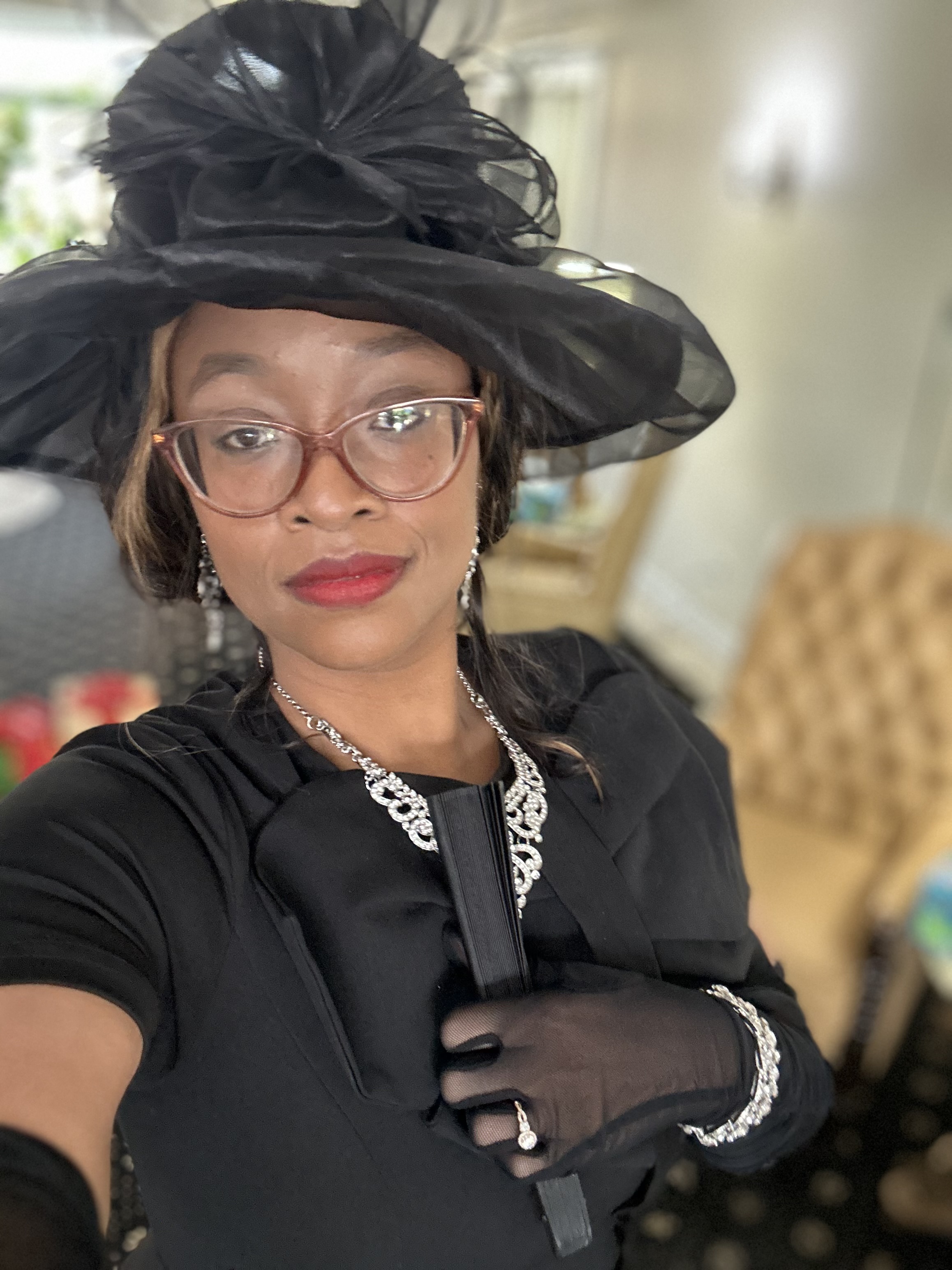
Happy New Year!
Love y’all, mean it!
If this work nourishes you, please consider pouring into my scholarship as a one-time gift.
- B
Strong, J. (1890). A Concise Dictionary of the Words in the Greek Testament and The Hebrew Bible. Strong’s H3427 (yāshab). This verb appears over 1,000 times in the biblical text, translated variously as “inhabit,” “to sit,” and “dwell.” It denotes a permanent settled state. ↩
Pierce, Y. (2021). In My Grandmother’s House: Black Women, Faith, and the Stories We Inherit. Broadleaf Books. (I read this book by accident when I was looking for In Search of Our Mother’s Gardens, lol. Changed my life, though.) ↩
Raboteau, A. J. (1978). Slave Religion: The “Invisible Institution” in the Antebellum South. Oxford University Press. Raboteau uses this term to describe the clandestine church that met in hush harbors where enslaved people could practice a faith that affirmed their humanity and their desire for liberation, free from the surveillance of white “Empire” religion. ↩
Source: Black Womanist Ethics (Scholars Press, 1988) or Katie’s Canon: Womanism and the Soul of the Black Community. This woman is my OG because she is the person credited with the phrase “do the work your soul must have.” That one senctence is the reason this newsletter exists ↩




Member discussion