
grandma's house is a museum

The greatest archive I have ever known lives in my grandmother’s house. Every corner of her home is a gallery of our family’s Black ass life, curated with intentional devotion: china tucked behind glass, perfume bottles lined up like jewels on a dresser, a Bible swollen with handwritten notes and scraps of paper, her playing cards and photographs worn thin from constant touch. These keepsakes are a living record of who we have been as a family, and who she believed us to be.
My grandmother’s house is a museum. And in that museum, she is the curator, the archivist, the historian, and the storyteller all at once.
When people hear the word “archive,” they usually think of libraries, universities, or government buildings filled with files and records no one has touched in decades. But an archive doesn’t have to be locked away in some large marble institution. At its simplest, an archive is a body of memory. It’s what we keep, what we pass on, and what we protect from being forgotten.
What makes an archive is a way of understanding what those things mean together. An archive has to tell a story. Otherwise it’s just stuff. The understanding is what makes a stack of photographs into a family album, or a row of perfume bottles into an altar. That framework is what allows the archive to guide you, like a map through memory.
My grandmother’s house was full of these maps. From the time I was two until I was fifteen, her house held my entire world: my grandmother, my parents, my sister, my uncle, and me.
Nothing in her house was accidental. Every shelf, every drawer, every bottle, every photograph had its place because she gave it one.
You couldn’t walk into a room without tripping over history. The china closet stood guard in the dining room, and I passed it every single day. It was always locked up tight, glass doors guarding her collection of dishes she never let us eat on, and only ever took out to clean and put back. Each plate told a story about elegance, about wanting to hold on to beauty even when life tried to strip it away. Those dishes glittered beneath her crystal chandelier even when the sun wasn’t shining. Each plate and crystal goblet placed so carefully you’d think they might break from being looked at too hard. I used to press my nose against the glass, leaving smudges Mother Grand would fuss about later. “Everything ain’t meant to be touched,” she’d tell me, and I’d learn to admire beauty from a distance.

Her dresser was another world I moved through daily. Her Bible lived at the center of that dresser, the binding worn down and the cover long since disintegrated. That Bible was swollen with underlines, slips of paper, bulletins, and prayers that never stayed on the page. As if it had absorbed the life she lived while reading it. I’d watch her read from it in the evenings, the house humming around us, and wonder if God had whispered extra verses just for her.
She kept her wig on an ornate golden peacock statue. And she had so many jars of powder and perfume bottles lined up neatly on a mirrored tray and a lace doily. To me, they looked like jewels in a case, round bottles, square bottles, some still half full, others long empty but too pretty to throw away. I’d sneak a fingertip of scent, dabbing it behind my ears before school. She always noticed. “That’s woman’s business,” she’d laugh, batting me away, but the smell of roses and powder would follow me all day like a secret.

I remember watching her one morning arrange those bottles on her dresser, turning them just so so the sunlight would catch each curve. She hummed quietly, as though speaking to each one. Later, she’d take a photograph she’d tucked into the mirror, or under the tray and show me a detail I’d never noticed: the way my uncle’s eyes crinkled when he laughed, or the crease of my mother’s hand when she prayed. Her devotion was active. Mother Grand honored life through meticulous attention, through the care of the archive.
I call it archival devotion1: the act of deliberately preserving the things, the stories, and the traces of life that matter most. My grandmother practiced it every day. And through her, I learned that devotion is not passive. It’s an active choice to remember, to value, to safeguard.
Taken together, my Grandmother’s House tells the story of a Black woman who survived, who raised children and grandchildren, who claimed joy and beauty for herself, and who left us a record to follow. It was the museum I was raised inside of. An archive I lived through and added to.
Archives, whether in grand institutions or in the corners of a grandmother’s home, are acts of resistance against erasure. They are proof that we lived, that we mattered, and that the stories we carry are worth preserving.
When you honor the archives in your own life, you are participating in something larger than yourself. And in doing so, you are telling the world: we were here. We mattered.
Love y’all. Mean it. If you love me back, buy me a book!
-B
Read More About My Grandmother :
 Bethany Nicole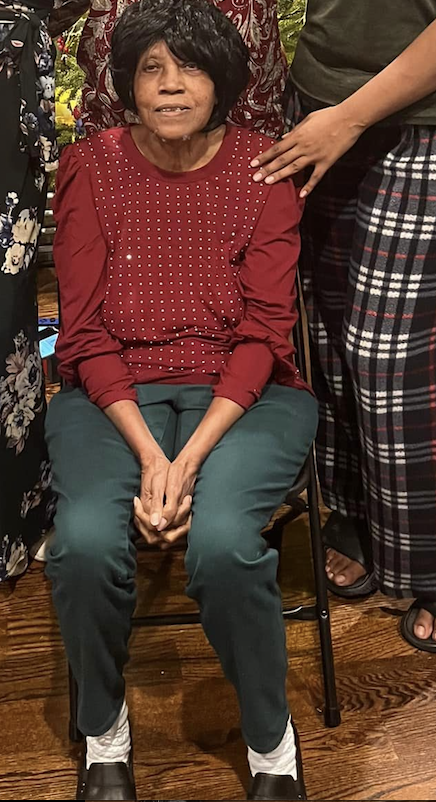
My good friend Rose J. Percy introduced me to this terminology. ↩





Member discussion