the math of mothering myself

Content note: This essay contains candid discussions of miscarriage, chronic pain, parentification, and intergenerational trauma. It also references emotional abuse, bodily grief, and childhood caretaking. Please tend to your heart as you read.

i.
I learned subtraction before addition.
At 5 years old, I had an abacus. My father bought it for me, his eyes gleaming with pride when I understood the concepts behind the colored beads. “You’re a natural,” he said. I didn’t tell him I loved it because the beads were smooth and cool in my hands, and because the clicking sound they made was louder than all the shouting.
I used to sit in my bedroom closet and tally the cost of existing:
- My father’s tantrums: volcanic, 3 times a week.
- My mother’s migraines: 7 days, etched into her brow like scripture.
- The probability of chaos: ∞, a number too heavy for a child’s tongue.
My job was to subtract myself. Erase my needs to care for others.
My job was to shrink into the cracks of our linoleum floors when voices sharpened. To hold my sister’s flailing limbs and whisper “shhh it’s okay” until my throat burned. To rub my mother’s temples while mine throbbed in secret, our bodies a broken telephone line: her pain, my pain, her pain, my pain.
I became adept at this subtraction, convinced that survival meant never adding my own desires to the equation. Even now, as an adult, I wrestle with these arithmetic scars: how do I add myself back in after a lifetime of subtraction?
My therapist says: You were parentified.
I say: Parentified sounds too clean. Like something you scrub off of a pot with baking soda and a bristle brush.
I was swallowed up.
ii.
When I miscarried, my mother washed my bloodstained sheets.
She didn’t speak. Just hummed Dona nobis pacem as she labored for me. That ancient lullaby, translating to Grant us peace, has always soothed my frantic heart. The melody floated through my childhood bedroom, coiling around my ankles to cool the burn of yet another harsh subtraction. Another bead removed from my ledger. Another tally in the column marked ‘Loss’.

The doctors called it a “spontaneous abortion.”
Which was interesting, because I hadn’t yet considered abortion. A clinical term for unchosen subtraction. I hadn’t consented to the sex any more than I’d consented to the hormonal changes, the swelling breasts, or the morning sickness. Shit just happens. Shit happens to me a lot.
I was just going with it.
My body, a room everyone kept entering and exiting without any thought to me at all. What difference was a baby?
My mother said: “Just because you want a baby, doesn’t mean you wanted this baby. Your time will come, and when it does, you’ll be ready.”
That made sense.
But readiness feels like a myth when the chance is gone before you even hear about it. When your own bones are a house of cards and you still dream of your mother dying. Those nightmares where her body dissolves like sugar in coffee, leaving me to stir the emptiness.
I don’t tell her this.
Instead, I count her breaths while she loads the washing machine.
iii.
A few years ago, I did something revolutionary:
I said “No” to my father.
He called late one evening, rage crackling through the receiver like a downed power line. I’d phoned him earlier that day, raw and trembling. I needed my daddy— the one who could morph into Superman when injustice struck. He’s saved me before.
But that night, the math tallied differently:
“Look. I’ve been where you are,” he hissed, his voice a serrated edge. “If you’re gonna be a bitch, don’t expect me not to say so. You think I don’t know what it’s like to struggle?”
I held the phone to my ear, silent. When did we start talking about you, dad? Somewhere in the background, a laugh track swelled—the kind they use in The Fresh Prince of Bel-Air when Uncle Phil schools Will with a truth bomb.
And I knew.
If he couldn’t be tender now, in this moment limp with grief, this scene ripped straight from the final act of an all-Black sitcom—he never could.
The man who’d wiped my tears at 10 was the same one who’d backhanded them away at 25. His tenderness had always been conditional, his love a slot machine that only paid out when I swallowed my pain. And that’s … not math.
Oldest Daughter arithmetic always equals taking his anger and turning it into something softer.
My mother’s voice in my head: “You don’t have to hold what’s not yours.”
I hung up.
Cried for an hour.
Then ate ice cream straight from the tub, laughing at the audacity of addition.
iv.
Our bodies are heirlooms.
My mother gifted me her hips, her smile, and her chronic pain. I used to press my ear to her chest as she slept, listening for the hum of her heartbeat like it was a weather report. Still alive, still alive, still alive.
At 33, I sit in a physical therapist’s office as she prods my lower back. “You carry tension here…like you’re bracing for impact.”
I laugh. Bracing is my mother tongue.
Inner child work is awkward.
I show my therapist a photo of myself as a baby in my mothers arms, little Bethany’s eyes are wide as if to say “You better not fuck this up.”
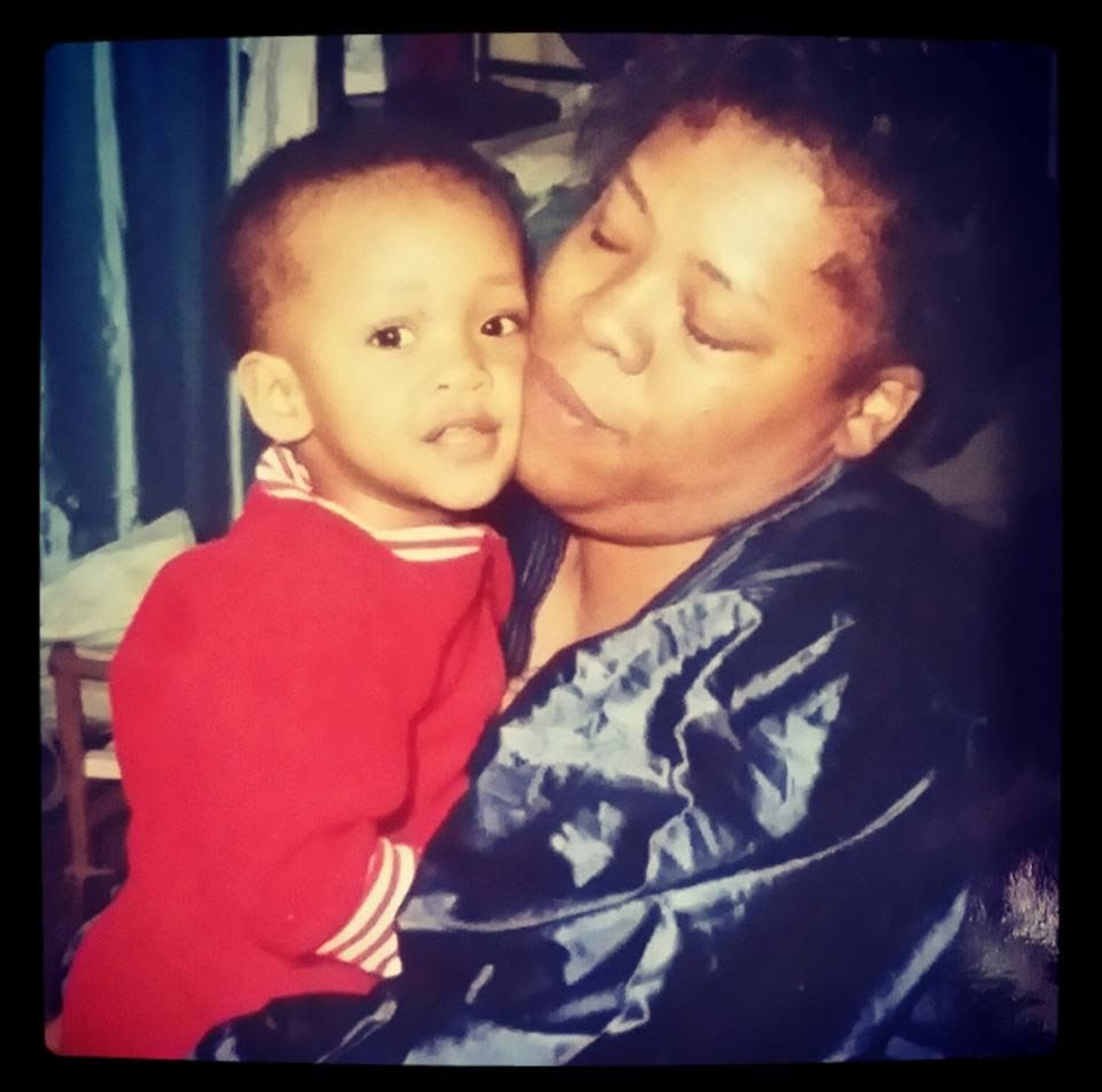
What do you need? I ask the little face before me.
Little me says: A nap. A cookie. To be believed when I say it hurts.
My therapist says reparenting is learning to count myself into the equation. So I add my needs, bead by bead.
My mother watches me, sometimes. Yesterday on the phone she said “You turned out good, baby.”
I wear it like a medal.
v.
Every time I make myself a cup of coffee, I think about my mother.
When I was little and she was very sick, I’d brew her coffee in her special mug—the big brown promo mug from Dunkin’ Donuts that held twice as much as a regular cup. Mommy has taken her coffee the same way since 1996: Two sugars, and enough milk so the coffee is our complexion. Every Saturday morning, I would carry that big-ass cup to her in both hands, little self trying to keep all the liquid off the floor as I made the trek from percolator to sleeping parent. And she would take the first sip, and say, “Oh, that’s just perfect.” And it would be, all through the Saturday morning cartoon lineup.
Today, I measure the milk. Add the sugars. Stir slowly. My hips don’t ache as I stand at the counter, but I feel her in the steam rising. Every sip reminds me. Dona nobis pacem. Grant us peace.
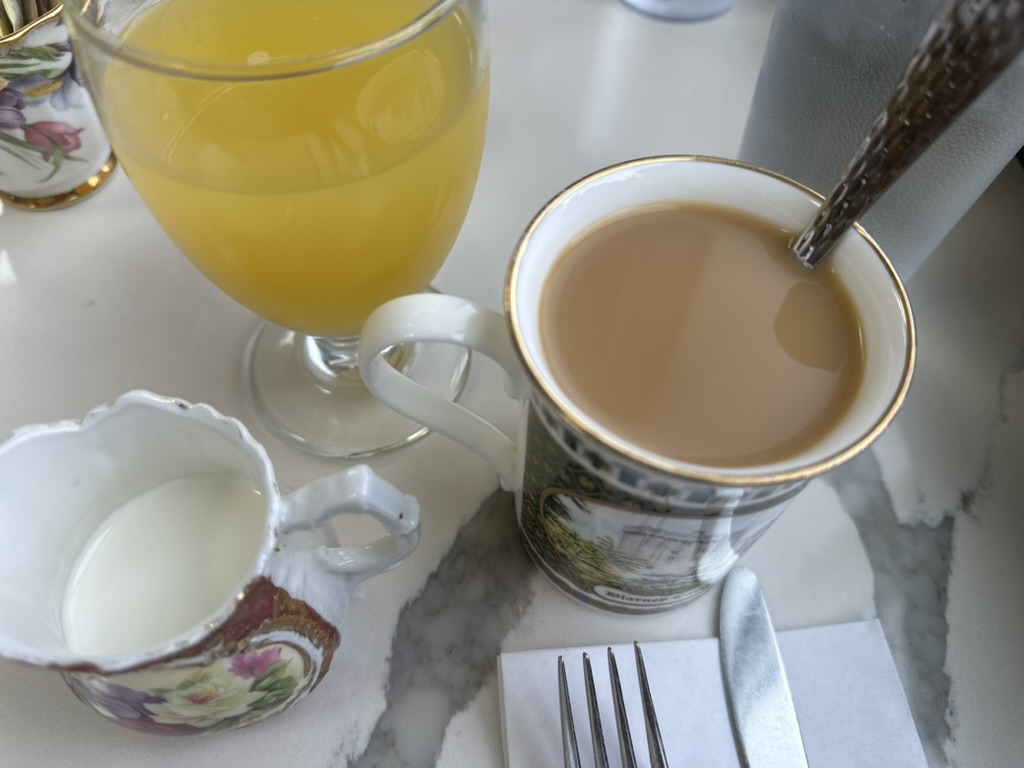
Therapist says chronic pain comes with its rituals. Maybe that’s why I still take my coffee like hers. But I’ve started adding new steps. I take three sugars. Sometimes I sit while it brews. Sometimes I drink it cold.
I lift the mug to my lips.
Click.
A bead slid toward joy.
Click.
A tally of survival becoming sweetness.
That old abacus still lives in the back of the same closet I used to count in, dusty and unused.
I keep it to remind myself:
Some equations are meant to be rewritten.
Love y’all. Mean it. If you love me back, Buy Me A Book!
-B




Member discussion