
corporate mammy revisited

When I first discussed the Corporate Mammy, I mapped a lineage of labor from sharecropping to my time in corporate America. I return to it now because the scaffolding of modern employment is collapsing, leaving thousands of Black women and entrepreneurs suddenly without contracts, roles, or protections we once depended on.

I was on a call with a Black-owned vendor when she got the email explaining that Target would no longer be ordering from her. The screen flickered as she read aloud, voice trembling, while her small warehouse sat stacked with unsold inventory. Weeks of planning, hope, and labor… gone in a single click. I could hear the frustration in her breathing. It sounded like the same exhaustion I’d felt years ago training my manager, building our ERG program, and then being passed over for promotion.
Corporate DEI programs promised inclusion and protection. They celebrated supplier diversity and employee resource groups, leaning heavily on Black employees and entrepreneurs of Marginalized Genders (MaGes) to do the emotional labor that made these initiatives feel real. The rollback has been catastrophic. Roughly 300,000 Black women lost jobs in early 2025,1 joining the 500,000 displaced during the pandemic.2 Competition has never been fiercer, and Black women are feeling it heavy.
The time it took for a vendor to go from having their products live on Target’s site, to staring at a full warehouse with a useless contract was about as long as it takes to sign an executive order.
ii.
One day society will have to reckon with the horrors we all bore during the pandemic. For two years, life felt suspended and offices, bedrooms, and isolation tanks blurred into one haunted, airless space.
During that time, I worked for fa UK-based SaaS company. It was my job to handle onboarding, admin, and culture for the two U.S. satellite offices. When the world shut down, there was no physical office left to manage, so my role began to shift. I became the de facto point of contact for health and safety updates across NY and LA. It was suddenly my job to track shifting mandates, write policy updates, and relay CDC guidance in real time. And I was happy to do it, rather than be forced to join the unemployment line. At the same time, New York was on edge. There were protesters facing the national guard in the streets, and helicopters constantly circling overhead.
While the city demanded justice, my inbox filled with requests for calm. They wanted talking points, and morale boosters. They wanted something to say in meetings and over Slack that wouldn’t make leadership uncomfortable. I built structures to keep people connected and steady, to make care visible, but every new initiative felt like a weight pressing against my ribs. Some days it was hard to tell if I was managing the crisis or being consumed by it. It felt so gut-wrenchingly futile to plan virtual team events for people who actually hand’t left their homes in a year.
When the company finally hired a DEI lead based in the UK, I trained her on every process and every informal expectation that made the work function. I handled the US region’s DEI programming while she observed, asking questions that revealed her lack of understanding of the stakes. I felt my pulse quicken at every misstep she nearly made, my jaw tighten with the effort of translating context, culture, and labor invisible to her. Months later, I learned she had spoken poorly of me to leadership and refused to hire me for the ERG program I had already built. My previous manager, no longer at the company but still attending meetings, repeated her racist remarks. I was left pissed off and burned out.
The exhaustion settled in my bones. Emotional scaffolding, mentoring, conflict management, relationship-building all piled up like dirty laundry in a hallway I could never leave.
iii.
Corporate DEI roles and initiatives leaned on the same expectations as the mammy archetype: care, availability, and the double bind of hyper-visibility and erasure.

The mammy figure performs crucial ideological work. The desexualized, self-sacrificing Black woman of American advertising and domestic lore was designed to hyperbolize Black women’s dedication to their employers and turn that exaggeration into a personality trait. As Patricia Hill Collins notes, the mammy is a “controlling image” that naturalizes racialized gender roles and legitimizes institutional dependence on Black women’s endurance.3
That archetype didn’t vanish because we successfully got the image of Aunt Jemima off the syrup bottle. Mammy got a glow up. Her image has been constantly repurposed to fit each era’s need to control and sentimentalize Black women’s labor. The 1914 Reconciliation Monument at Arlington National Cemetery immortalized a Black “mammy” cradling a white child at the feet of Confederate soldiers, casting servitude as loyalty and care as a civic virtue. A generation later, a restaurant literally built in the shape of a mammy figure in Natchez, Mississippi turned her body into architecture, a roadside attraction where visitors could dine “inside” the caricature. A Republican-led effort to reinstate the Confederate ‘mammy’ statue at Arlington was narrowly defeated in the House as recently as June of last year.
In offices, mammification became the expectation that Black women hold teams together through mentoring, mediation, and emotional caretaking. Workplace research calls this “cultural taxation” or “glue work”: invisible labor essential to cohesion but rarely compensated or rewarded.4
“Since many people rely on powerful Black women in jobs (unwittingly turning us into ‘mammies’ who ill bear all the burden—and there are those among us who certainly take pride in this role) we can easily become tragically overextended.”
— bell hooks, Sisters of the Yam, Work that Makes Life Sweet, p. 35
DEI gave this work a title and, briefly, a budget—but not a future. Companies celebrated diversity initiatives only while they were profitable and signaled virtue to investors and consumers. When the market turned and politics shifted, the architecture collapsed. DEI didn’t fail; it fulfilled its purpose. It kept Black women and MaGeS laboring at the edge of power, visible enough to project progress, disposable the moment proximity to us became controversial.
Recent events confirm the pattern. Corporate rollbacks and staff eliminations surged through 2024 and 2025, and a White House executive order curtailed federal DEI mandates. When DEI became politically inconvenient, its caretakers were dismissed—just as mammies were cast aside once the children they raised no longer needed tending. The corporate mammy was built for service, not survival.
iv.
If DEI can no longer safeguard Black women and MaGeS, what forms of shared infrastructure, collective visibility, and economic reclamation could fill that void?
I’ve carried that question in my chest for years. The weight presses against my ribs, a memory of every late-night Zoom, and every expectation to soothe, translate, and hold space for others while my own labor went unseen. I feel it still when I remember that call with my vendor as Target left her out to dry. The exhaustion lives in my shoulders, her jaw, and in dwindling savings accounts across the country.
It’s a question of imagination. One meant for Afrofuturists to ponder.
In the first Corporate Mammy essay, I explained why I quit my job. This time, I am building spaces where the work itself can endure. I am making a zine: essays, reflections, research, and traces of labor that often disappear. Paid subscribers will get behind-the-scenes looks at its creation and a free PDF of the final edition. This zine is a living archive of care, skill, and ingenuity, standing in the shadow of the long tradition of self-published Black women’s literature. It preserves knowledge, highlights strategies, and allows others to draw on these insights to protect their own labor and claim visibility.
Alongside it, I’m launching Soulwork Explained, a video series to accompany this newsletter. We’ll dive deep into nonfiction works on Black history5, alongside womanist thought, Afrocentricity, Afrofuturism, and liberation theory. This is a shared repository for learning, reflection, and archival thinking: a space to witness labor, intellect, and care, and to see them as power, and infrastructure. By naming labor, documenting practices, and mapping networks, this series transforms what was invisible into tangible intellectual, cultural, and potentially economic leverage for Black women and MaGeS navigating precarity today.
I return, in part, to the memory of my client with her warehouse full of unsold inventory. That moment still sits in my chest, a reminder of what can vanish when systems fail to protect Black women and other MaGeS. It’s why I imagined SERF—the Soulwork Emergency Relief Fund—with microgrants for those currently navigating unemployment and precarity. I built the framework, drafted the application, sketched pathways for funding, even opened conversations with the ACLU. And yet, I have not launched it. Fear sits heavy beside the hope that fuels this work. But hesitation is part of Soulwork too: naming it, holding it, and moving anyway, even when the weight of care and labor feels like it could collapse you.
All of these projects are interventions. They reclaim labor that DEI intended to solve for, but instead was extracted and discarded. They archive what was disposable and safeguard the knowledge, the strategies, the networks that have always kept us alive and connected, even when the organizations around us failed.6
These spaces embody Soulwork. They are living, breathing structures of care, reflection, and protection.
Consider: what networks, histories, and systems of support already exist in your communities, and how might they be documented, strengthened, and reclaimed?
Take Action: Protect Black Women’s Labor and Safety
Earlier in this essay, I shared that I imagined SERF — the Soulwork Emergency Relief Fund — as a rapid-response safety net for Black women and MaGeS navigating job loss and precarity. At the time, I hadn’t launched it. But during that process, I created a resource guide: a free PDF filled with verified hotlines, legal support, emergency relief programs, and community-based practices designed to safeguard labor, wellbeing, and futures.
You can download it here and use it for yourself, your community, or anyone navigating displacement or precarity: [Emergency Workforce Survival Guide For Black Women]
Every share, every saved contact, every use of these resources is part of Soulwork in action: making care, labor, and protection visible and accessible.
Love y’all. Mean it. If you love me back, Buy Me A Book!

Next Reads
If you want to go deeper into the intersections of labor, image, and survival, you can start in these related pieces:
- Corporate Mammy — On overextension, labor, and reclaiming power in workplaces that profit from Black women’s care.
- Welfare Queen: On Work Ethic, Laziness, and Lies — A breakdown of how respectability and mythmaking shape our understanding of labor and worth.
- Hood Viral: On the Relationship Between Social Media and Local Organizing — Examining how digital performance and grassroots activism collide in the age of virality.
https://www.cbsnews.com/boston/news/black-women-unemployment-rate/ “The overall unemployment rate is 4.3% and in the last year it barely moved.
But the data tells a different story when it comes to Black women and employment. Their unemployment rate has jumped to 6.7% which one expert calls a warning sign….That’s one of the factors behind more than 300,000 thousand Black women leaving the workforce between February and April — corporate America’s retreat from DEI, or Diversity, Equity and Inclusion….The third factor Taylor pointed to is layoffs in the federal government. There are more Black women working for the federal government than in the private sector.” ↩
By summer, for the first time since April 2021, more people were looking for work than there were jobs available. According to the Bureau of Labor Statistics’ July JOLTS report, about 7.18 million positions were open while unemployed workers edged past that number, pushing the vacancies-to-unemployed ratio below 1.0. https://www.bls.gov/jlt/ ↩
Collins, P. H. (2000). Black feminist thought: Knowledge, consciousness, and the politics of empowerment (2nd ed.). Routledge.
In this seminal work, Collins discusses the mammy as one of several “controlling images” that serve to naturalize and legitimize the oppression of Black women by portraying them in ways that reinforce racialized gender roles and institutional dependence on their endurance. Further described in corporate America in my first essay ↩
corporate mammyi. I am reading Their Eyes Were Watching God for the first time. My momma and I are in a lil two person bookclub, and we chose to read Zora Neale Hurston, because we both realized it was a huge gap in our education. We finally got to the iconic and oft quoted line, where Hurston writes that the Black woman Bethany Nicole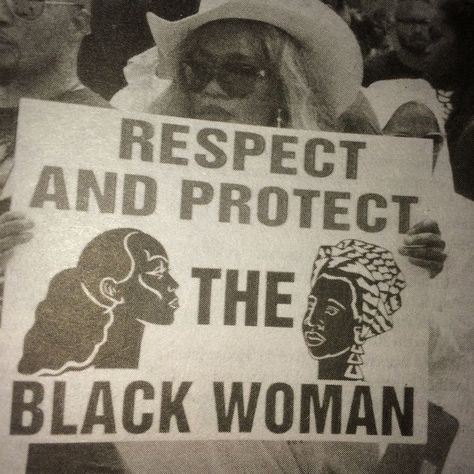
Cultural Taxation: Originally coined by Dr. Amado Padilla in 1994, “cultural taxation” refers to the additional, often invisible labor expected from individuals of marginalized groups. This includes tasks such as serving on diversity committees, mentoring underrepresented colleagues, or educating others about cultural issues without additional compensation or formal acknowledgment. Diversity
Glue Work: This term describes the informal, relational tasks that maintain team cohesion and organizational culture. These tasks, while essential, are often unrecognized and uncompensated. Psychology Today ↩
centering women, children, lesbians, nonbinary folks, and disabled communities ↩
I consider these our vocational inheritance, as an extrapolation of what Katie Geneva Cannon calls our spirtual inheritences from our foremothers. ↩




Member discussion